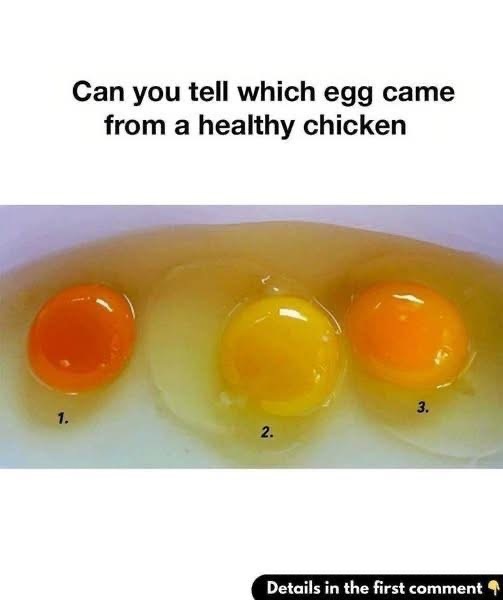
Identifying eggs from healthy chickens isn’t solely about the egg’s appearance. While many believe a dark orange yolk is the only sign of a healthy egg, the reality is more nuanced. The health of the hen and the quality of the egg are most reliably indicated by production methods and nutritional profile—not just color.
Here is a detailed guide to help you make informed choices.
Visual Clues: What the Egg Tells You
While not definitive on its own, the appearance of an egg can offer clues about the hen’s diet and health.
Yolk Color
| Healthy / Nutritious Indicator | Conventional / Less Nutritious Indicator |
|---|---|
| Deep orange or golden yellow – suggests a diet rich in natural pigments (xanthophylls) from greens, marigolds, or insects. Pasture-raised hens typically produce these vibrant yolks. | Pale yellow – often indicates a diet primarily of light-colored grains like corn or wheat, typical of caged or factory-farmed hens. |
Yolk Texture
| Healthy / Nutritious Indicator | Conventional / Less Nutritious Indicator |
|---|---|
| Firm, domed, and sits high in a thick, viscous egg white. This is a sign of freshness and high quality (USDA Grade AA). | Flat, easily broken, and runny – suggests an older egg or one from a stressed, unhealthy hen, often found in lower grades (USDA Grade B). |
Egg White
| Healthy / Nutritious Indicator | Conventional / Less Nutritious Indicator |
|---|---|
| Thick, cloudy, and stands up well around the firm yolk, indicating high protein quality and freshness. | Thin, watery, and clear – spreads widely in the pan, typical of older eggs or lower-quality grades. |
Eggshell
| Healthy / Nutritious Indicator | Conventional / Less Nutritious Indicator |
|---|---|
| Strong, thick, and hard to crack – may have a slightly rough texture, indicating good mineral absorption by the hen. | Thin, brittle, and pale – often a byproduct of stressful living conditions and poor nutrition in industrial farms. |
Understanding Egg Carton Labels
Since you cannot see the egg before buying it at the store, the most reliable method for identifying eggs from healthy chickens is to understand the labels on the carton. These labels indicate the hens’ living conditions and diet.
Here is a breakdown of common claims, ranked from most meaningful to least.
The Gold Standard: Pasture-Raised
| Aspect | What It Means |
|---|---|
| Living conditions | Hens live outdoors on fresh pasture (often rotating to new land) for most of the year, with a mobile shelter for protection |
| Diet | Natural diet of grasses, seeds, and insects, supplemented with feed |
| Why it is best | Typically the gold standard for hen welfare; produces the most nutrient-dense eggs (higher in omega-3s and vitamins A and E) |
| What to look for | Third-party certified labels like “Certified Humane Pasture-Raised” for verification |
Very Good: Free-Range & Organic
| Label | What It Means | Key Consideration |
|---|---|---|
| Free-Range (USDA Regulated) | Hens have continuous access to the outdoors, but the space can be a small fenced area and access may be limited | Outdoor lifestyle is better than being caged; hens can forage for some natural food |
| Organic (USDA Regulated) | Hens are fed 100% certified organic, vegetarian feed without antibiotics or pesticides | Organic standards require outdoor access (free-range), ensuring better quality of life than cage or barn systems |
Good, But Not Great: Cage-Free
| Aspect | What It Means |
|---|---|
| Living conditions | Hens are not kept in tiny battery cages and can move freely inside a barn, perch, and lay eggs in nests |
| The catch | “Cage-free” does not guarantee outdoor access. The hens may still be confined to a crowded barn without ever seeing sunlight, meaning their diet and living conditions are still highly controlled |
Misleading & Marketing Terms
| Label | Why It Is Misleading |
|---|---|
| “Vegetarian-Fed” | Claims hens are fed a diet of corn and soy with no animal by-products. However, chickens are naturally omnivores who thrive on eating insects. This label often means they are denied access to their natural food source. |
| “No Added Hormones” | This is meaningless for poultry. The use of hormones has been illegal in the US and EU for decades for all chickens, regardless of label. |
| “Natural” | This has no legal meaning for production methods. It simply means no artificial ingredients were added during processing, which is true for almost all fresh eggs. |
| “Farm Fresh” | A purely marketing term with no regulation or specific meaning. |
Egg Grades: Understanding USDA Quality
For the highest quality in terms of freshness and appearance, look for the USDA Grade AA shield. This indicates:
| Grade | Characteristics |
|---|---|
| Grade AA | Firm yolk, thick white, high quality |
| Grade A | Similar to AA but slightly less firm |
| Grade B | Thin, runny whites; flat yolks; typically used for liquid or frozen egg products |
Important note: Grade indicates freshness and appearance, but does not speak to hen welfare or nutritional density.
Actionable Tips for Buying Eggs
For Maximum Nutrition & Ethics
Look for a carton specifically labeled “Pasture-Raised” from a trusted brand with third-party certification (such as Certified Humane or Animal Welfare Approved).
For Quality Within Budget
Choose Organic or Free-Range as a reliable second tier. These guarantee better living conditions than conventional caged eggs.
Direct from the Farm
If possible, buy from a local farmer at a farmers’ market. You can ask directly about:
-
How the hens are raised
-
What they are fed
-
Whether they have access to outdoor pasture
-
See the quality of the eggs for yourself
- Quick Reference: Egg Label Cheat Sheet
Label Outdoor Access Natural Diet Meaningfulness Pasture-Raised Yes (continuous) Yes (grasses, insects)  Gold standard
Organic Yes (required) Organic feed Very goodFree-Range Yes (limited) Supplemental Very goodCage-Free No No Good, but limitedVegetarian-Fed No No (unnatural) MisleadingNatural / Farm Fresh Unregulated Unregulated MeaninglessNo Added Hormones Unregulated Unregulated Illegal for decadesFinal Thoughts
Identifying eggs from healthy chickens comes down to three key strategies:
-
Look for “Pasture-Raised” on the carton, ideally with third-party certification
-
Choose Organic or Free-Range as reliable alternatives
-
Buy directly from local farmers when possible and ask questions
While yolk color and egg appearance can offer clues, they are not definitive on their own. The most reliable indicators are the living conditions and diet of the hen—information you can find on the carton or by speaking directly with the farmer.
Your egg purchase is not just a choice about breakfast. It is a choice about animal welfare, environmental impact, and the nutritional quality of the food you put into your body.
The best eggs come from happy hens. And happy hens live outside, eat greens and bugs, and have room to roam. Look for the labels that guarantee that—and you will taste the difference.
-

